How will banks compete, and win, in 2026? Get the report.

Coconut Founder and CEO Heads To Silicon Valley

Her Bags Are Packed And She Is Ready To Go Coconut Calendar’s CEO and Founder, Katherine Regnier, has been invited to a prestigious one-month mentorship program in San Francisco, hosted by Neal Dempsey. A Bit About Neal Dempsey Neal Dempsey lives in California and he was one of the first personal investors in Starbucks. He started his career in sales and is now Senior Partner at Bay and responsible for 9 board seats and driving the company’s investment towards liquidity. He has invested in innovative, industry-changing companies like, Guidewire (market cap: $2.09 billion), Eloqua (which was acquired in 2012 by Oracle for $871 million) and DropCam. You can read more about Neal here. Neal’s Running Start Program is a month-long mentorship program focused on up-and-coming business owners in trending industries. Neal is passionate about new businesses and investing his time in developing great, emerging leaders. The goal of the program is to work 1:1 with select centerpreneurs to help grow their businesses and develop key relationships, focusing on specific areas of opportunity. Neal has selected 4 business owners from around the world and Katherine is one. Here is what Neal has to say about Katherine and Coconut Calendar.   THE JOURNEY IS ABOUT TO BEGIN… Neal’s Running Start program will start April 23rd and runs until May 24th. Looking to boost revenue and deliver a premium experience to your clients? Schedule a consultation with Coconut Software to learn more about how our appointment scheduling solutions can get you there. About Coconut Software Coconut Software, a Saskatoon-based tech company, is an industry leading software company that provides sophisticated yet simple appointment and lobby management solutions. Geared towards managing walk-ins, on-site & pre-booked appointments, all while providing real-time insights to optimize results, Coconut provides enterprise level solutions that redefine how customers interact with organizations while maintaining the highest levels of security and compliance. Born out of a need for real-time, easy-to-adopt scheduling and customer management, Coconut is the preferred solution for modern banks and credit unions across North America. Since its founding in 2011, the company has quickly become the leader in appointment scheduling and lobby management platforms for modernizing the customer experience, while saving companies time and money.

Coconut’s Year in Review: Our Key Takeaways from 2020

It is safe to say that 2020 has certainly been a year like no other. Yet this year has truly been a reflection of our society’s resilience to shine despite the circumstances and our perseverance to come out stronger than we have before. As this year comes to a close, we would like to share how Coconut’s commitment to People, Passion, and Performance remained a priority. People  The success Coconut faces today is without a doubt a testament to the hard work and passion of our dedicated team to support and provide for our customers. When the pandemic hit, we responded like most businesses did by going remote to keep our people safe and refocusing all our efforts on fast tracking new features like Phone & Video conferencing to support our customers.  Adapting to the times  In the beginning of the year we set an objective to double our growth before the end of 2020. When the pandemic hit, we pivoted towards remote working and built a new business model that would help us adapt ourselves to the changes in order to meet our set goals. Surprisingly, we found that going remote made communication even more transparent and increased collaboration and performance between our locations. As a result, 22% of our employees received promotions, we ended up doubling our growth, and successfully tripled our revenue in the last 15 months. Staying proactive towards inclusivity  During the pandemic, the world also saw protests to rightfully fight for an inclusive and more just society. Coconut proudly stands in support of the Black Lives Movement, taking the initiative to start having conversations with our diverse staff, staying proactive by conducting Diversity and Inclusivity workshops, and reviewing and adjusting hiring and retention policies.   Giving back to the community Each quarter we donated to a charitable cause, driven by the participation of our customers in our surveys and outreach. Thanks to everyone’s dedicated effort, we’ve proudly donated a total of $5000 to the Canadian Anti-Racism Network and the World Wildlife Fund. We intend on ramping up our charitable donations in 2021 as well as working with our employees to support their volunteer efforts in their communities.  Passion  Understandably, this year’s circumstances have forced banks and credit unions to rethink their customer engagement strategies. Our passion to elevate our customers using our deep domain expertise in the financial industry helped support our customers through these times going as far as to triple conversion rates, manage visitor traffic, and overall prioritize their customers’ experience through this pandemic.  Supporting the shift to the new appointment economy  We did not only provide resources and tools to support customers, but pivoted our product teams’ objectives to support our customers in adapting to the new appointment economy. Examples of the new features developed this year include Phone and Video Meeting add-on – allowing staff to engage with their customers anytime, anywhere, Online Queuing – enabling users to place themselves in the line without having to leave their car, and Phone Call Back Requests.  Developing great partnerships to build the solutions you want to see The most recent of the exciting partnerships has been with Google as we introduce Google Reserve to the Candian financial institutions, allowing banks and credit union customers to directly book appointments with their Google searches. Another partnership developed this year is with Constellation as it promises to integrate our customers’ platforms to centralize functionality and optimize efficiencies. Our ever growing curiosity and passion to keep expanding and understanding our customers led us to partner with two top banks in America.  Connecting with our customers Considering the pandemic eliminated the traditional means of interacting with customers through tradeshows and other in person events, we had to get creative with how we engaged our customers and the industry. This creativity led us to host interactive Wine and Tea Tasting events, webinars where we teamed up with WECU, case studies with clients like Interior Savings, collaboration with think tanks such as Forrester, The Financial Brand and Future Branches to build consumer studies to understand the changing environment of the appointment economy, and sponsoring different events including a Tech Talk with the American Banker Magazine Digital Banking summit.  Performance  At Coconut, we refuse to accept mediocrity of our product, our performance, and the results we deliver. We thrive on getting it done and getting it done right! We’ve had a great year, proven out by some awards and recognition we’re proud about.  Coconut’s Recognitions and Rewards of 2020 We were the runner up for the Future of Saas Product of The Year, selected from thousands of companies across North America to participate in the Google Accelerator program, we were on the Beta Kit list of Companies to Watch in Canada, and even Selected for the 2020 Women in Tech Silicon Valley Program. To us, it’s not about winning the awards, but how we win them which we do through our manifesto and values that hold us accountable for our actions.  Keeping the Momentum Going  This year may be almost over but we’re thrilled about the future. To keep the momentum going, Coconut plans to increase headcount by 23 people this coming year, with many positions actively recruiting now. We are looking for curious problem solvers that fit our culture and who understand that being a part of Coconut is about prioritizing People, Passion and Performance. We want to take a moment to acknowledge everyone including our customers, board members, investors, employees and their families for being part of our journey this year. Without this strong support network, none of our successes would have been made possible. Thank you and here’s to 2021!

Happy People Build Great Solutions

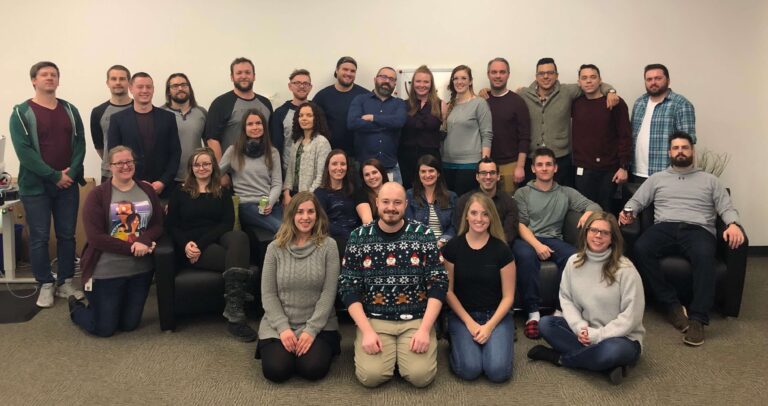
group image of coconut staff

Coconut is committed to building a culture that keeps our team engaged and supported so that every person not only feels valued in their work but has fun doing it.

Returning to Work After Maternity Leave

How companies can help make the transition back a little easier Going on maternity leave, along with the many unknowns of a first time mother, was scary enough. What I didn’t anticipate was how tough it would be to return to work after my leave. However, Coconut’s preparation and willingness to accommodate my needs made for a seamless transition.    In a white paper written by Maven, 75% of expecting mothers say they’re excited to go back to work after giving birth. But in the end, 43% of them end up leaving their jobs. Returning to work is a big transition coupled with a mix of emotions – it is both exciting and terrifying.  Often bad reintegration experiences leave women looking for new opportunities. Companies should be asking what they can do to better support women, specifically working moms, to help attract and retain top female talent. This is especially important for tech companies that continue to lack female representation, only 14% of software engineering and 25% of computer science-related jobs are held by women.   Companies don’t need to implement costly initiatives – there are small changes you can make that will have a big impact on making the transition back to work a little easier.  Communication Keep the line of communication open It is important to stay in contact and be available to the employee but allow it to be on their terms  – meet for lunch, share important documents, or invite them to key meetings. Attendance should never be mandatory but knowing it is available eases some of the fear of missing out.  Coconut allowed me to keep my email and Slack accounts active during my leave – I was able to share pictures, stay in contact with my team and keep up to date with changes that occurred. I continued to feel a part of the team and I wasn’t blind sided by any major changes. Before my return, I had a video call with my manager to discuss the team dynamics, where I would fit in, and my top priorities once I returned. The team shared project updates and planning documents, this allowed for a quick ramp up once I was back. I was also invited to important team meetings but never felt obligated to attend because meetings were recorded and shared so I could watch at my own convenience.   Regular and consistent feedback  Once an employee returns to work it is important to ensure they have all the information they need to be successful in their role, set clear expectations and provide regular feedback. Managers should touch base to see how the employee is doing, acknowledging both their personal and professional well-being. Having a dedicated time to discuss how things are going, as well as tasks and goals, ensures everyone is aligned and the employee feels valued.  I received an onboarding package on my first day back at Coconut that included all the important company information and documents, such as an updated org chart, job description, policies and FAQs. It was nice having everything I needed organized in one place. During my first week, I met with my manager to discuss short term and long term objectives, as well as assign success metrics using 7Geese. This has really helped me stay focused and understand how I am contributing to our company objectives. There have definitely been days where I was questioning whether I was meeting expectations, but our regular 1-on-1 meetings, 3 month review, and Cheers (public recognition shared with the company) make it easy to get feedback, which has helped ease that anxiety.  Warm Welcome Make their first day back exciting Your employee is excited to be back, show them you’re just as excited to have them back by making their first day a little special. Announce their return to the company, introduce them to new team members, or take them out for lunch.  Coconut sent me a little welcome package before my first day back that included some company swag, treats and a handwritten note. I also received a small delivery from my manager which was an unexpected surprise. My return was posted to Slack and everyone at the company sent well wishes and welcomes. I was able to connect with new team members and scheduled a quick chat to introduce myself and get to know them a bit better.  Create a support network with co-workers There are most likely a lot of other working parents at the company that have gone through similar experiences. Companies should encourage employees to create a group where parents can share experiences and seek support from other working moms at the company.    There wasn’t currently anything in place at Coconut but I knew there were many experienced moms I could lean on for tips and advice. Coconut already uses slack for office groups, such as D&D and puppy playdates, so it was the perfect place to connect with the other moms. Having an online group also allowed all employees to join and it wasn’t limited to those in the same office. Expecting mothers and those currently on maternity leave were also invited to join.    Flexibility Parenting responsibilities don’t just disappear between 9-5, giving employees the freedom to decide when and where they work (within reason) is probably the most important. The Mom Project found that 88% of surveyed women considered flexibility to be as important as, if not more important than, salary. Not every job is suited to remote work but allowing employees to ease in, such as working half days for the first couple weeks or starting midweek, will help make the transition less overwhelming.  Coconut has always had a flexible working policy, such as working from home and flexible working hours, this has been invaluable for accommodating daycare and appointments. I was also able to start midweek to ease in and adjust to my new routine. At Coconut we get an additional 8 days off – Cabana Days. It’s nice knowing I don’t have to

Remaining Professional in Pajamas

Professional in Pyjamas - Blog Header

COVID-19’s Impact on Returning to the Office Many people are uncovering a startling and thought provoking realization: it’s actually feasible to work from home. Over the past three months, millions have had to maneuver the workplace into their home, blurring the boundaries of work and leisure more than ever before. As people have begun to grow accustomed to working from home, it’s interesting and important to consider how the eventual transition back into offices will effectively look like. At home, many have the opportunity to connect with their loved ones throughout some of the more stressful aspects of work, while also being able to remain comfortable in their office and attire of choice. This inherent duality of professionalism and respecting personal space arising out of the work from home dilemma has allowed workers to realize that they might not want to return to the office. Based on a  survey of 2000 American workers conducted on May 14th, 64% of Americans claimed that they would be uncomfortable returning to the office in the next 30 days or more.  Since the survey’s initial polling, COVID-19 has continued to hinder the return to the office. Primarily because of the safety concerns for workers themselves and risks they might pose to their families at home.  Many businesses and services deemed essential by the government have created as safe an environment as possible by following the mandated procedures and adhering to the correct social distancing policies. However, this isn’t feasible for all workplaces, especially when it comes to highly concentrated office buildings.  The Problems with Returning to the Downtown Core One of the largest complaints people have about returning to office buildings is the logistical nightmare of the elevator system. With some buildings in the downtown core towering over 50 stories tall, and thousands of employees relying on the elevator to get them to their respective locations in the building, the elevator is for most employees the only way they can access their workplace.  There is also the concern of management teams identifying which groups of workers are deemed to be the first group needed to be back in the office, while also having to find people within that group who are willing to go back whilst the pandemic is still at large. With COVID-19 still remaining as a threat to any form of social gatherings, people are wondering about the logistical safety measures that will have to be in place in order to deem the office a safe place to work. Many of these concerns even include the shared facilities workers have become reliant on inside of the actual offices, including; bathrooms, shared kitchens and appliances, sharing desks or company devices, and many others. Erik Gordon, a professor at the University of Michigan’s Ross School of Business stated in a CNBC article that there is a large backlog of services which people have been desperate to access since the beginning of quarantine –  such as healthcare, dentists, barbers – but Gordon claims that even getting beyond the peak of COVID-19 cases won’t be enough for people to feel comfortable returning to these services nor workers to feel comfortable in their own offices again. Rather, the number of new cases will have to drop to nearly zero for the public to become comfortable with sharing both the office space and the building with the general public again. Finally, there is the commuting concern: With fear of public transit being an easy way to spread disease within a confined space, many are left wondering what it will take for them to feel comfortable again to ride a bus or subway. Based on the 2016 Canadian Census, 12% of workers in the Toronto take on average a forty-minute long transit commute every day to and from the office, with an additional 12%  of workers carpooling with members outside of their own family, making almost a quarter of the workforce dependent on riding to and from work whilst sharing a confined space for a long period of time.  The Longevity of Home Officing According to the Harvard Business Review in 2019, Approximately 43% of the American workforce has successfully performed some aspect of their job from a remote location of their choosing, and with the recent migration to work-from-home conditions, that number is likely to have skyrocketed. One of the main appeals of the office workspace is that everyone is under one roof and working as a cohesive unit for their company, which can account for employee productivity by just being in a professional setting, as well as having more direct access to company resources throughout the course of the workday.   With so many workers now adopting this model, and more people being able to realize its potential when asked to report into the office, it is interesting to see where the future of office space will continue to take us as our return to normalcy becomes more elongated. It’s important that we try and maintain a sense of normalcy through our business interactions in the home office, even if it’s over a virtual medium for the time being. One thing that can help you continue to maintain that reliable face-to-face engagement with your customers and professionals while distanced is through Coconut’s services such as virtual meetings; offering real customer connections over a reliable platform. Cloud based appointment scheduling software and virtual meeting methods like phone and video, provided by companies like Coconut, ensures that making and maintaining connections with clients and prospects is more accessible than ever before. Through a seamless integration with video conferencing providers such as Zoom and Google Meet, customers are able to schedule their virtual meetings quickly and intuitively, maintaining your personal connections virtually. With many wondering where the hybrid model will take us, whether it be from the dining room table to the kitchen or the home to the office, one thing is for certain. Our solutions and team are working together to empower your connections across our digital platforms. We

Hiring and Onboarding During the Covid-19 Pandemic

Hiring and Onboarding During the Covid-19 Pandemic

Article Source: https://www.mbassett.com/blog/qa-with-coconut-software-cro Martyn Bassett Associates Inc. recently sat down with Jim MacDonald, CRO at Coconut Software, for a Q&A to get his insights and experience hiring and onboarding during the quarantine period stemming from Covid-19. Here’s what we found out:  Tell us about your market outlook and anything you can share about your hiring or growth plans. Even though we were successful in raising our last round in November, as a leadership team, we were all wondering how long this will last, given the questionable future of a pandemic-laden economy. A month? A year? So we decided to build a new business model for the remainder of the fiscal year that cut back on spending and assumed new, “worst-case” revenue targets to ensure we were ready for whatever the next three years look like. Have you hired and onboarded new staff members during the quarantine? Yes, we successfully hired and onboarded a new Head of Product Marketing. Fortunately for everyone, the candidate had made it to our headquarters in Saskatoon for the final interview shortly before the quarantine.  Although we made the decision as a company to freeze all hiring, we considered this hire to be strategic and part of our bigger go to market business plan, which is why we decided to continue with the offer.  Looking back, this was the best decision we could have made. We’re already seeing a positive impact and have a series of wins from the work that this individual is already engaged in.  Describe your experience of remote onboarding. Fortunately for us, we have some real strength in our Human Resources team. They took the baton to ensure a smooth onboarding process, including sending our new candidate a laptop and welcome package to their home to make sure she would feel like she was joining a really warm, supportive company (which is our culture). One week before she started, she was added to all the regular meeting invites. When her first day came, it was a Monday, she was on the first call: our 9 am sales stand up. Everyone welcomed her and we all laughed at how weird it was to welcome a new team member by video, but overall, I would say it went very well and was a positive experience for all. Describe your experience as a leader during this quarantine/lockdown. It’s surprising how well and how quickly our people have adapted to doing business through video. It’s our new normal. This is not just something we’re dealing with internally, we’ve also been learning how to adapt and work effectively with our customers and partners who may not be as technically proficient, and for whom the adoption of video has been slower. We’re all learning together. One big thing that has come out of the Covid-19 quarantine is our desire as a senior leadership team to optimize and create efficiencies.  One example of this is having to ask ourselves, “do we really need to have satellite offices?” Does it make sense if this work from home lifestyle becomes a longer-term way of life and way of doing business?  Has anything good come from the experience of a remote/quarantine style of working and leading? Yes, last year we struggled as leaders to figure out a way to get our Saskatoon based employees to feel more part of the teams they were on when other team members were based in Ontario. Today, employees are feeling more a part of their teams than ever! Why do you think that is? Now we do all of our stand-ups together, using video, every day. Gone are the days when someone would walk over to someone’s desk and ask a question which the other team members wouldn’t hear.  Now everyone is getting all the information at the same time: LIVE. It’s made the marketing team more cohesive than ever before. It equalizes everyone as everyone has access to everyone and to the same information. Any lessons or struggles you’ve learned from, that you can share. There’s no doubt that we all miss connecting with people, the physical closeness of a team.  On a personal level, one of the downsides is not having an off switch when you work at home. Even though my one hour commute to the office was a pain, it forced a break in my day. I would use that time to listen to the radio or a podcast. Now we’re in environments where many of us don’t have natural breaks throughout the day until we stop to eat. Some people handle this situation better than others. For many people, this is not easy. This is something, as managers, we need to keep an eye on. What suggestions do you have for other business leaders who will be hiring and onboarding new employees in the future?  Know that the hiring process will be harder. No doubt about it. Do the best you can. When it comes to onboarding, spend more time and energy ensuring that the “welcome to the company” process is as engaging as possible.  Take the time to send things to the new employee before their first day. Get them on the right distribution lists. Ensure they have access to the right Slack or GChat channels. Include them in your regular meetings. Try to recreate the process of walking them around the office, making introductions. Yes, this requires more energy, but it’s important.  Through these recent events, we’ve learned that not all of our employees have an effective workspace at home. While in week one, a coffee table seemed like a good workspace, it’s not a long term solution. We’ve responded to this by allowing people to take home their second monitor to connect to their laptops. In some cases, we’ve permitted people to take home their desk or their chair.   Employers should spend time understanding what their people need and provide an allowance to turn a bedroom, living room, kitchen, or den into an effective working space. The most important lesson

Looking Back at Finnovate – Top 3 Takeaways

Blog Hero - Looking Back at Finnovate

It’s been a week since the team and I returned from the Finnovate Fall Conference in New York and I have not stopped thinking about all the exciting sessions I had the chance to attend, and how much they align with the goals we have here at Coconut. At the show, we were fortunate enough to meet with so many professionals from the financial services and fintech industries that are passionate and excited about the changes coming to the financial world. The show was broken out into two sections. First, we were treated to two days worth of demos from both emerging and established fintech organizations. It was great to see so many organizations coming up with creative solutions to help financial institutions solves their largest problems. Whether it was security, financial literacy or digital banking tools, the presenting companies shared compelling solutions that left us and the rest of the conference attendees with a lot to think about. The second section consisted of two days of panel discussions and keynote presentations. This is where the industry leaders really got to shine, taking us through detailed talks on new security concerns, fostering innovation, managing digital transformation, customer experience as a key differentiator and the emergence of AI technology. There was a lot to learn over the two days but I was happy to see a number of key themes emerge. 1. Personalization as Differentiation I noticed this theme come up frequently throughout the different sessions, particularly in those hosted by Forrester Research, as well as during panels on innovation and customer experience. The prevailing takeaway was that personalization can be a key competitive differentiator for financial institutions, and something that customers really value. In the personalization session hosted by Forrester Research’s Alyson Clarke, Principal Analyst, Digital Business Strategy, noted that in order to stay ahead of the competition, banks need to stop thinking like a retailer. Bank customers do not buy financial services as frequently as they make purchases with other retailers — there are generally 3-5 years between purchases. That makes it difficult, but far from impossible, to build and maintain brand loyalty. Clarke then focused on data. With the information that banks and credit unions collect when working with their customers, they can use that information to create much more personal, 1:1 experience that will keep the financial institution top of mind. Using real life points of contact like birthdays, anniversaries, children going to college, etc. as a means of reaching out is a great way to connect and be top of mind when they’re ready for a new financial product. Through this sort of personalization, financial institutions could see far more success in maintaining the sort of long term brand loyalty that’s required when dealing with the low frequency of customer purchases typical to financial products. 2. The Growing Importance of Customer Experience Dovetailing with personalization, a number of the sessions also discussed the importance of banks and credit unions focusing on enhancing customer experience. In an excellent keynote presentation, Jeremy Balkin, Head of Innovation at HSBC presented a case study highlighting the success they’ve seen since implementing a service robot named Pepper. The main goal of the ‘Pepper the Robot’ program was to increase branch traffic and generate more appointments with the advisors and staff that work in branch. In the 14 months since deployment, HSBC saw a 41% increase in new account openings. HSBC attributes this success to Pepper turning a regular trip to the bank into an experience for new and existing customers. With so much attention around the innovative products and solutions that are making a visit to the branch unnecessary, banks need to invest in creating experiences that will bring customers through the door. This sentiment was echoed later in the day during a panel discussion on the importance of creating an impactful digital experience. The panel noted that traditionally, banks used segmentation to determine how to reach out and market to their customers. However, times have changed. Major life events like graduating from college used to be a reliable signal that a customer was now likely to be preparing to buy a house, and buying a house would signal their readiness to start a family. But today, this is often not the case. Banks now have to look to more individual data to find out when the best time is to reach a person. And with the right data, they can deliver not only the right marketing material, but deliver it in the way most likely to appeal to that particular customer. To this end, technology can be incredibly useful to banks and credit unions. By expanding their marketing methods through push notifications, apps and SMS notifications, banks are able to leverage data for precision targeting, and then get their message in front of customers eyes in a way that’s unobtrusive, yet highly effective. 3. Partnering with Fintech With the whole theme of the conference centered around bringing banks and credit unions together with today’s leading fintech providers, the final theme was an obvious one — technology partnerships. Still, it was great to see so many panelists from both sides discuss the importance of these partnerships as a way to retain banking customers and improve the overall experience banks are providing. During Jeremy Balkin’s keynote and during a panel discussion that immediately followed, he spoke at length about the importance of financial institutions embracing emerging fintech companies. He noted how there is so much knowledge that banks have when it comes to serving customers but they can often get stuck when encountering challenges with technology and competitive alternatives. That’s where Fintech companies come in. Through strategic partnerships, they can help banks solves those problems far more quickly than they could on their own, allowing banks to focus on what is most important: providing the best services for their customers. Looking to get started on delivering a premium experience to your clients? Schedule a consultation with Coconut Software to learn more